Written by Abogado · 0229-09-01 · Last updated: 2026-09-01
Studying in Spain is one of the most popular pathways for international students who want to gain a high-quality education, experience a new culture, and build their future in Europe.
However, choosing the right study program can be challenging. Vocational training, university degrees, master's programs, PhDs, and specialized courses all offer different advantages, requirements, costs, and career opportunities.
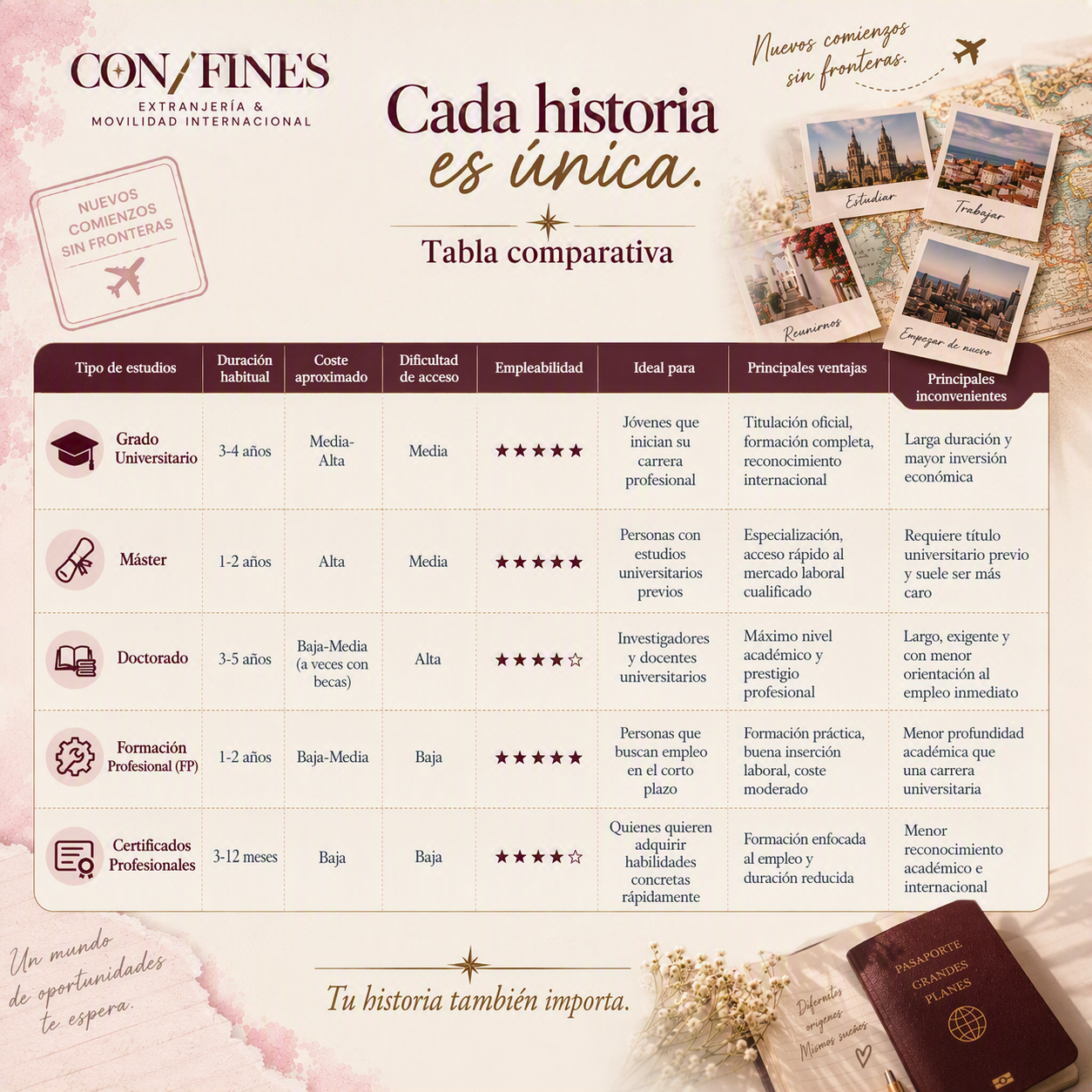
In this guide, we compare the main educational options available to international students in Spain.
Vocational Training (FP)
Vocational Training, known in Spain as Formación Profesional (FP), focuses on practical skills and professional preparation in a specific field.
It has become increasingly popular due to its strong connection with the labor market and shorter duration compared to university studies.
Advantages of Vocational Training
- Highly practical education.
- Strong links with employers and companies.
- Generally more affordable than university degrees.
- Good employability in high-demand sectors.
- Shorter study periods.
Disadvantages of Vocational Training
- Lower international recognition compared to some university degrees.
- Early specialization.
- Less focus on research and academic careers.
Who Is It Best For?
Students who want to enter the job market quickly and acquire practical, career-focused skills.
Bachelor's Degree
A bachelor's degree is the traditional university pathway for students seeking a comprehensive education in a particular academic field.
Most bachelor's programs in Spain last between three and four years.
Advantages of a Bachelor's Degree
- Official university qualification.
- Wide range of career opportunities.
- National and international recognition.
- Access to postgraduate studies such as master's degrees and PhDs.
Disadvantages of a Bachelor's Degree
- Greater investment of time and money.
- Slower entry into the workforce.
- Less specialization during the early years of study.
Who Is It Best For?
Students looking to build a long-term professional career through a solid academic foundation.
Master's Degree
A master's degree allows students to specialize in a specific discipline after completing undergraduate studies.
Programs usually last one or two years.
Advantages of a Master's Degree
- Advanced specialization.
- Improved employability.
- Access to higher-level positions.
- Many programs include internships or practical projects.
Disadvantages of a Master's Degree
- Requires a previous university degree.
- Can be expensive.
- Does not always guarantee immediate salary increases.
Who Is It Best For?
Professionals and graduates seeking specialized knowledge and stronger career prospects.
PhD Programs
A PhD represents the highest academic qualification available within higher education.
It is mainly focused on research, innovation, and the development of new knowledge.
Advantages of a PhD
- Highest academic qualification.
- Access to research and university careers.
- Deep specialization in a chosen field.
- International academic recognition.
Disadvantages of a PhD
- Requires a long-term commitment.
- High academic demands.
- Less focused on practical business applications in some sectors.
Who Is It Best For?
Individuals interested in research, academia, scientific careers, or highly specialized professional fields.
Professional Master's and University-Specific Qualifications
In addition to official degrees, many Spanish universities offer their own professional and specialized programs designed to address current market needs.
These programs are often highly practical and focused on employability.
Advantages
- Strong specialization.
- Flexible learning formats.
- Up-to-date content.
- Practical approach.
Disadvantages
- Recognition may vary depending on the country or employer.
- Some programs do not provide access to PhD studies.
Who Are They Best For?
Professionals seeking specific expertise in a relatively short period of time.
Specialized Courses and Professional Programs
Spain also offers intensive professional courses, executive programs, technology bootcamps, language courses, and industry-focused training programs.
Advantages
- Short duration.
- Lower cost.
- Practical and skills-oriented.
- Fast entry into new industries.
Disadvantages
- Less academic depth.
- Variable recognition depending on the institution.
Which Option Is Best for International Students?There is no single answer.The best choice depends on your age, educational background, professional experience, budget, and long-term goals in Spain.If your priority is entering the workforce quickly, vocational training may be the most suitable option.If you are looking for a comprehensive academic education, a bachelor's degree is often the best choice.If you already hold a university degree and want to improve your qualifications, a master's program can provide a significant competitive advantage.Need Help Studying in Spain?Choosing a study program is only part of the process. International students must also ensure that their institution, course, and documentation meet the legal requirements for obtaining or renewing a student residence authorization in Spain.At CON-FINES, we help international students understand their options and prepare the necessary immigration procedures to study legally in Spain.
Tags
- study in Spain
- student visa Spain
- international students
- vocational training Spain
- bachelor's degree Spain
- master's degree Spain
- PhD Spain
- study permit Spain
- immigration Spain
- education in Spain
Written by
Abogado
CON/FINES
The information on this page is indicative and updated in line with current regulations. Timing largely depends on the competent authority.