Written by Equipo Legal Con Fines
What Is the Hague Apostille?
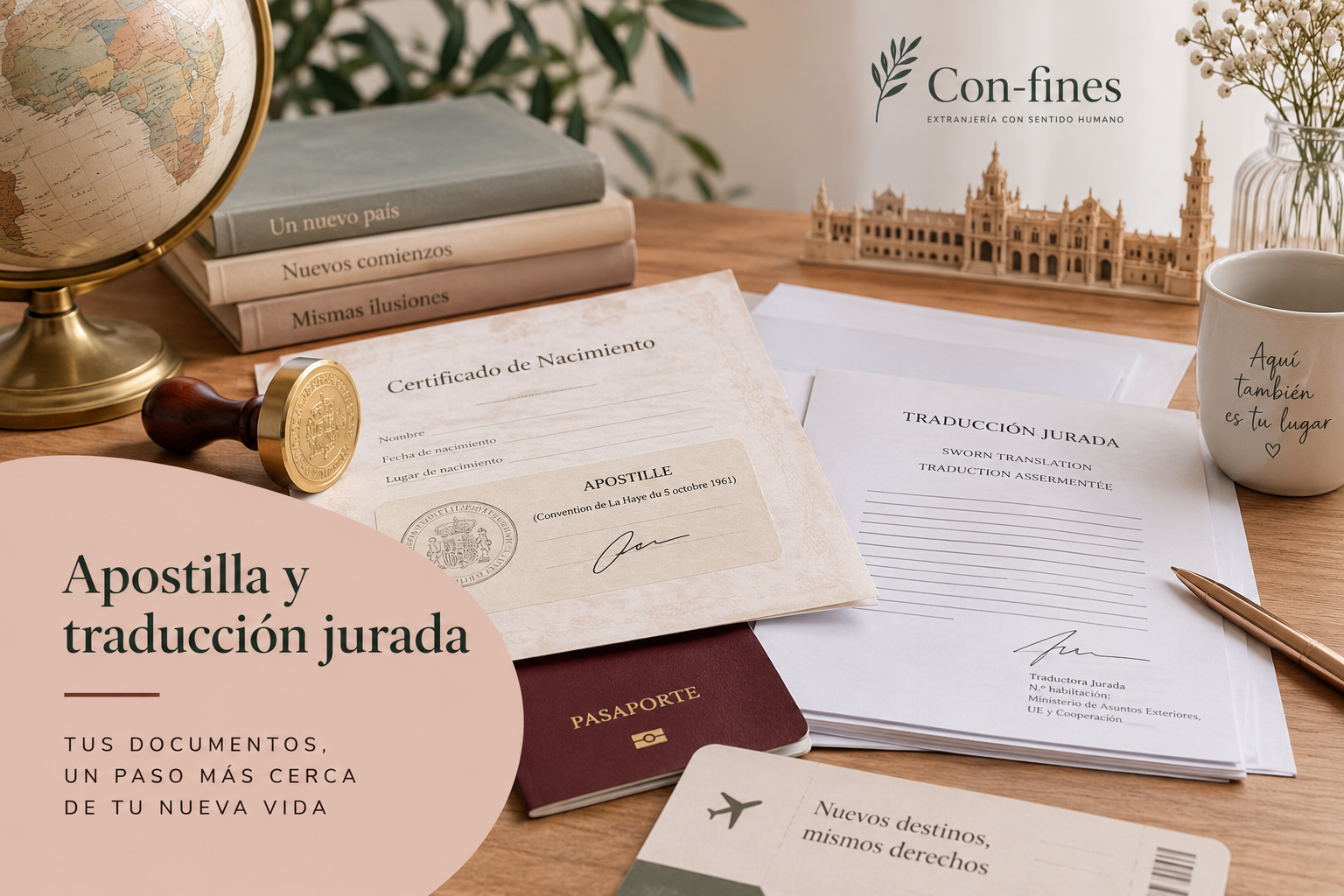
The Hague Apostille is a mechanism that certifies the authenticity of certain public documents issued in one country so they can be recognized in another country that is party to the 1961 Hague Convention. In simple terms: if a document was issued in a country where the Convention applies and it needs to be used in Spain, the apostille normally replaces the traditional diplomatic legalization process. But here's something important: not all foreign documents require an apostille. Before starting any procedure, you should check the country of issue, the type of document, and whether any treaty or rule exempts it from this requirement. You can check the updated list of countries that are party to the Hague Convention on the official website of the Hague Conference on Private International Law:
👉 Check Hague Convention member countries
What Should I Check Before Requesting My Documents?
Before you start requesting, apostilling or translating documents for an immigration procedure, you should check: - exactly which documents the procedure requires; - who must issue them and in which country; - whether they need an apostille, legalization, or are exempt; - the maximum age each document can have when you file your application; - whether they need an official translation into Spanish; - and when it makes sense to request them, given the deadlines for filing your case. Order matters too. Requesting all documents at once, without first reviewing the case, isn't always the fastest or most cost-effective option.
Avoid Wasting Time and Money on Documents You Don't Need At Con Fines, we review your case and the documents your procedure requires beforehand, so we can tell you exactly what you need, how it should be submitted, and when to request it. Our goal is to help you avoid spending time and money on unnecessary certificates, apostilling documents that don't need it, translating documents too early, or having to request them again because they no longer meet the procedure's requirements. Good document planning can help you avoid requests for further information and unnecessary delays. Because preparing an immigration case isn't just about filling out forms — it's about knowing what to submit, how to submit it, and when.
Tags
- Documentation
- Apostille
- Sworn Translation
- Immigration
Frequently asked questions
We answer the most common questions on this topic.
When Do I Need a Sworn Translation?
When a foreign document that needs to be included in your file is written in another language, you may need to provide an official translation into Spanish. One of the most common ways to do this is through a Sworn Translator authorized by Spain's Ministry of Foreign Affairs, European Union and Cooperation. Translations done by these professionals are official and can be submitted to Spanish administrative and judicial bodies. You can check whether a professional is authorized and search for translators by language, country or province directly on the Ministry's official search tool: 👉 [Official Sworn Translators and Interpreters Search Tool](https://www.exteriores.gob.es/es/ServiciosAlCiudadano/Paginas/Buscador-STIJ.aspx)
Does an Apostille Expire?
This is a very common question. The apostille or legalization itself doesn't have an expiration date. However, the document it was applied to may be subject to a specific validity period. This is where planning your case carefully becomes especially important. In immigration procedures, certain documents are often required to have been issued within a specific timeframe before filing the application. That timeframe isn't necessarily the same for every document or every procedure, so it must be checked specifically for each case. This means requesting a document too early can end up costing you twice — for the certificate itself, its apostille, and even its sworn translation — if by the time you file your application it no longer meets the required timeframe. That's why understanding the timing of the procedure is just as important as knowing which documents you need.
Written by
Equipo Legal Con Fines
CON/FINES
The information on this page is indicative and updated in line with current regulations. Timing largely depends on the competent authority.
Related services
These services relate to what you have just read.
Family
Family reunification, family of Spanish nationals and of EU citizens.
View service →Citizenship
Spanish citizenship: preparation, follow-up and appeals.
View service →Studying
Student visas, study stays and changes of status.
View service →Work and business
Employment authorisations, self-employment and professional profiles.
View service →